
The emergency management scenario has the characteristics of strong suddenness, complex environment, and diverse risks, which require a "rapid response, accurate monitoring, and dynamic warning" equipment system to achieve real-time perception of environmental pollutants, toxic and harmful gases, and extreme weather conditions, providing data support for rescue decision-making and risk prevention and control. The following are the classification and application schemes of core monitoring equipment:
1、 Environmental emergency monitoring equipment
1、 Environmental emergency monitoring equipment
Focusing on sudden environmental pollution incidents (such as hazardous chemical spills, water pollution, soil pollution, etc.) requires the ability to deploy quickly and detect multiple parameters synchronously.
1. Portable water quality emergency detector
Technical features:
Integrated photoelectric colorimetric and ion selective electrode technologies can be used for on-site detection of over 30 parameters, including pH (0-14, accuracy ± 0.01), dissolved oxygen (0-20mg/L, ± 0.1mg/L), heavy metals (lead, cadmium, mercury, etc., detection limit 0.001mg/L), cyanide (0-1mg/L), volatile organic compounds (VOCs, 0-100mg/L), etc. The response time is less than 3 minutes and it supports battery power supply (continuous operation for ≥ 8 hours).
Application Scenario:
In the event of chemical wastewater leakage or sudden river pollution, emergency personnel can complete the entire process of water sample collection, testing, and data recording within 10 minutes. For example, an aniline leak occurred in a certain river channel, and the equipment detected a concentration of 1.2mg/L within 3 minutes (24 times higher than the standard), providing key data for upstream interception and downstream dilution schemes.
2. Soil heavy metal rapid detector
Core configuration:
Using X-ray fluorescence spectroscopy (XRF) technology, 8 heavy metals including lead, chromium, arsenic, etc. in soil can be directly detected without sample pretreatment, with a detection range of 0-10000 mg/kg, accuracy of ± 5%, detection time<60 seconds, and equipment weight<3kg (portable).
Practical value:
When a hazardous chemical transport vehicle overturns and causes heavy metal leakage, the pollution diffusion range can be quickly delineated (such as completing a 500 square meter area screening within 1 hour in a certain case and identifying 3 high concentration pollution points).
3. Emergency environmental monitoring vehicle (mobile laboratory)
Integration capability:
Equipped with gas chromatography-mass spectrometry (GC-MS) for detecting VOCs components with a lower limit of 0.1 ppb, atomic absorption spectrometer (for heavy metal detection), water quality multi parameter analyzer, etc., and equipped with a sample pretreatment system, laboratory level analysis of soil, water, and gas samples can be completed on site, and data can be transmitted to the emergency command platform (with a delay of less than 1 minute).
Typical applications:
After the explosion accident in a chemical industrial park, the monitoring vehicle arrived at the scene within 1 hour and issued a report on the concentration of characteristic pollutants such as benzene and chlorine within 3 hours, providing scientific basis for the evacuation of residents within a 5km radius.
2、 Emergency gas monitoring equipment
2、 Emergency gas monitoring equipment
For the leakage of toxic and harmful gases (such as chemical raw materials, gas, toxic smoke, etc.), it is necessary to have high sensitivity, fast response, and the ability to detect multiple gases simultaneously.
1. Portable multi gas detector ("four in one" and expansion type)
Basic configuration:
Standard detection of combustible gases (LEL, 0-100%, catalytic combustion principle), oxygen (O ₂, 0-30% VOL, electrochemical), carbon monoxide (CO, 0-1000ppm), hydrogen sulfide (H ₂ S, 0-100ppm), expansion module can add 20+gases such as ammonia (NH ∝), chlorine (Cl ₂), response time<10 seconds, alarm mode is sound and light+vibration (explosion-proof level Ex ia IIC T4).
Rescue scenario:
Before rescuing confined underground spaces (such as sewage wells and cellars), inspectors should hold devices and confirm within 30 seconds whether there is oxygen deficiency (O ₂ < 19.5%) or H ₂ S exceeding the standard (> 10ppm) to avoid secondary casualties.
2. Gas leakage imaging device (infrared/laser)
Technological breakthrough:
Infrared thermography uses the characteristic of gas absorbing specific wavelength infrared light to visualize methane, VOCs and other leaks (such as SF ₆ leak imaging), with a detection distance of 0-50 meters and a leak point identification accuracy of ± 0.5 meters; Laser telemetry instruments (such as TDLAS technology) can detect toxic gases (such as CO, SO ₂) within 1000 meters, with a concentration resolution of 0.1 ppm.
Advantage scenario:
In the investigation of pipeline leaks in chemical plants, it is not necessary to come into contact with high-risk areas, and the leakage point can be located through imaging images (in a certain case, a valve with a diameter less than 0.5mm was found to have a slight leak).
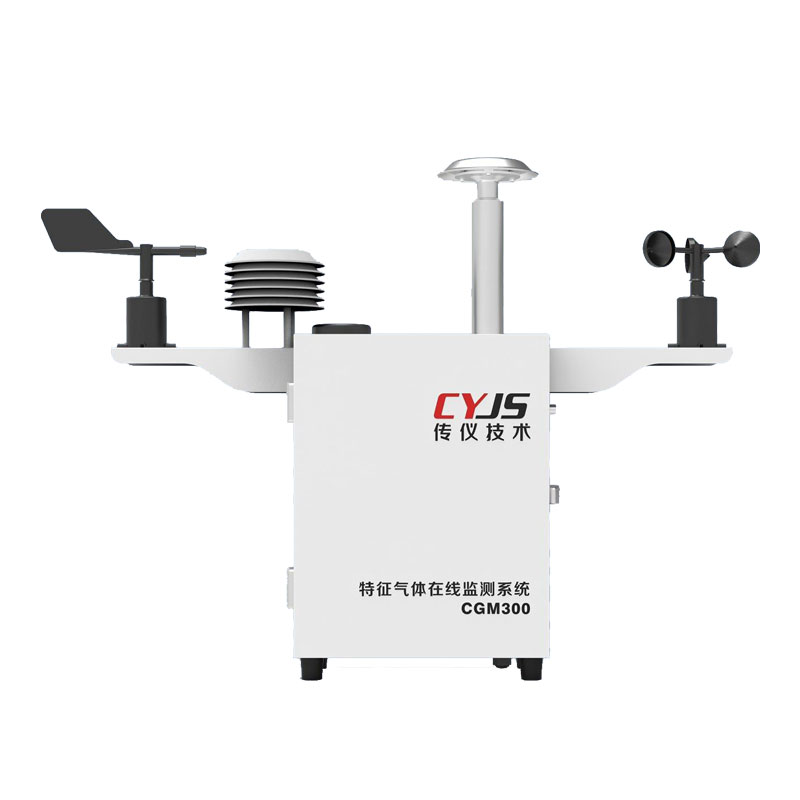
3. Rapid deployment of gas monitoring stations (emergency type)
Design features:
Modular design, set up within 5 minutes (bracket+solar power supply), monitoring parameters include combustible gases (LEL), toxic gases (such as Cl ₂, NH ∝), VOCs (PID method), and meteorological parameters. Data is uploaded in real-time via 4G/5G, supporting multi station networking to form pollution diffusion monitoring zones.
Application case:
A certain oil tanker overturned, causing a gasoline leak. Three monitoring stations were deployed within a 1-kilometer radius, and a concentration gradient map was constructed within 10 minutes. Combined with wind direction data, the impact range was predicted 2 hours later, guiding rescue personnel to set up a warning zone.
3、 Emergency meteorological monitoring equipment
3、 Emergency meteorological monitoring equipment
Meteorological conditions directly affect the development of emergencies (such as fire spread, pollutant dispersion, rescue safety), and real-time, high-precision local meteorological data needs to be provided.
1. Portable emergency weather station
Core parameters:
Measure wind speed (0-45m/s, ± 0.1m/s), wind direction (0-360 °, ± 3 °), temperature (-40~60 ° C, ± 0.2 ° C), humidity (0-100% RH, ± 2%), air pressure (300-1100hPa), support handheld/tripod installation, battery life ≥ 48 hours (lithium battery), data recording interval can be set (1-60 seconds).
Rescue value:
At the scene of a forest fire, real-time monitoring of wind speed (accelerating fire spread when>5m/s) and wind direction (guiding rescue personnel to stand); In chemical leakage incidents, the diffusion speed of pollutants is predicted based on wind speed (for example, when the wind speed is 3m/s, the VOCs diffusion radius increases by 1.8km per hour).
2. Micro meteorological station (dedicated for rescue sites)
Deployment characteristics:
Compact in size (weighing less than 500g), it can be mounted on drones, rescue robots, or temporary supports to monitor local micro weather conditions (such as temperature, humidity, and wind speed inside building ruins), and data is transmitted through Bluetooth/LoRa short-range (suitable for areas with weak signals).
Typical scenario:
In the rescue of earthquake ruins, micro meteorological stations monitor the temperature (>35 ℃, prone to heatstroke) and CO concentration (release of fire residues) near trapped personnel in real time, assisting in the development of demolition plans.
3. Emergency weather radar (mobile type)
Technical Capability:
Vehicle mounted Doppler weather radar, with a detection radius of 50km, can monitor precipitation intensity (0-100mm/h), storm path, thunderstorm warning, with a data update frequency of 5 minutes per time, providing advance warning for natural disasters such as floods and typhoons (such as warning of heavy rainfall 1-2 hours in advance).
Application example:
A sudden severe convective weather occurred in a certain area, and the mobile radar detected a wind speed of 12 levels (typhoon level) 40 minutes in advance. The emergency department promptly evacuated more than 2000 people from low-lying areas.
4、 Emergency Monitoring Integrated System
4、 Emergency Monitoring Integrated System
1. Emergency Command Data Platform
Core functions:
Integrate environmental, gas, and meteorological monitoring data, combine GIS maps to generate a three-dimensional model of "pollution concentration diffusion path impact range", automatically calculate evacuation distance (such as when chlorine gas leaks, delineate a 300 meter warning zone based on the concentration>1ppm area), and support GPS positioning linkage with rescue teams.
2. Unmanned aerial vehicle emergency monitoring system
Equipment combination:
The hexacopter drone is equipped with gas sensors (VOCs, toxic gases), thermal imaging cameras, and micro weather stations, with a range of 30 minutes. It can enter high-risk areas such as explosions and fires, and transmit real-time images and data (such as identifying three incomplete combustion leakage points in a certain oil tank fire).
5、 Equipment selection and practical advice
5、 Equipment selection and practical advice
Priority portability: Emergency equipment should weigh less than 5kg (handheld) and have a deployment time of less than 10 minutes, such as portable gas detectors and micro weather stations, to meet the needs of rapid response.
Strengthen explosion-proof and waterproof measures: In chemical, gas and other scenarios, equipment must pass Ex ia IIC T4 explosion-proof certification; In flood emergency situations, choose water quality detectors with IP68 protection level.
Real time data: Priority should be given to devices that support 4G/5G transmission (such as emergency monitoring stations) to ensure that the command center synchronously obtains on-site data (with a delay of less than 30 seconds).
Through the collaborative application of the above devices, emergency management can achieve a transformation from "experience judgment" to "data-driven". For example, in a chemical leak accident, the combination of portable gas detectors (on-site concentration), meteorological stations (diffusion conditions), and command platforms (model prediction) increased emergency response efficiency by 60%, shortened evacuation time for affected areas to 15 minutes, and minimized accident losses.
Related products
Related products



|