
Currently, atmospheric pollution has become an important factor restricting the sustainable development of cities and affecting public health, with particularly prominent issues such as dust pollution, sandstorms, volatile organic compounds (VOCs), and odors. Chuanyi Company integrates a series of products such as dust monitoring, sandstorm monitoring, micro air stations, PID VOC monitoring, and odor monitoring to build a comprehensive and high-precision environmental monitoring network, achieving real-time perception, precise traceability, intelligent warning, and efficient control of air pollution, ultimately achieving the goal of improving air quality, safeguarding public health, and enhancing environmental management level.
1、 Monitoring equipment
1、 Monitoring equipment
1.1 Dust monitoring
Monitoring parameters: PM2.5, PM10, TSP (total suspended particulate matter), temperature, humidity, atmospheric pressure, wind speed, wind direction
Core function: Real time monitoring of dust emissions from construction sites, mines, storage yards, and other places, with functions such as sound and light alarms for exceeding standards, and video linkage capture
Installation scenarios: construction sites, demolition sites, material yards, docks, concrete mixing plants, etc
1.2 Sandstorm Monitoring
Monitoring parameters: dust concentration, visibility, wind speed and direction, air pressure, precipitation, etc
Core function: Real time monitoring and trend prediction of sandstorm formation, development, and movement path, providing graded warning
Installation scenarios: urban fringe areas, transitional zones between deserts and oases, along transportation arteries, etc
1.3 Grid Microstation
Monitoring parameters: six parameters (PM2.5, PM10, SO ₂, NO ₂, CO, O3) and five meteorological parameters
Core function: High density distribution to form a city air quality monitoring grid, accurately reflecting regional air quality differences
Installation scenarios: both sides of urban roads, residential communities, school areas, industrial park boundaries, etc
1.4 PID method for volatile organic compounds
Monitoring parameters: Total volatile organic compounds (TVOC) and characteristic pollutants (benzene derivatives, non methane total hydrocarbons, etc.)
Core function: Using photoionization detection technology to achieve real-time online monitoring of VOCs, with fast response speed and high detection accuracy
Installation scenarios: Key VOCs emission sources such as chemical parks, painting workshops, printing enterprises, gas stations, etc
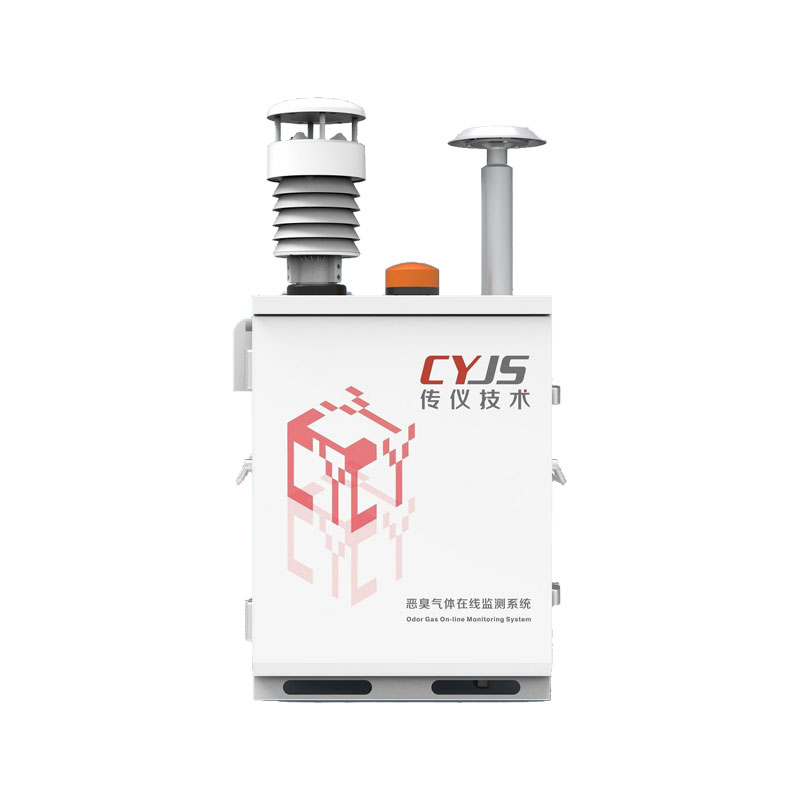
1.5 Odor gas monitoring
Monitoring parameters: Odor concentration, H ₂ S, NH ∝, trimethylamine and other characteristic odorous substances
Core function: Simulate human olfactory senses, achieve objective quantitative monitoring and traceability analysis of odor pollution
Installation scenarios: sewage treatment plants, landfills, livestock and poultry farms, chemical enterprises, etc
2、 Application scenarios
2、 Application scenarios
2.1 Construction site dust control
By installing dust monitoring equipment at the construction site to monitor real-time parameters such as PM10, the sprinkler system is automatically triggered to reduce dust when it exceeds the standard, and warning information is pushed to the construction party and regulatory authorities, effectively controlling construction dust pollution and reducing dust emissions by 40-60% compared to traditional management methods.
2.2 Comprehensive Management of VOCs in Industrial Parks
Install PID method VOC monitoring equipment and micro air stations in the chemical industrial park and surrounding areas to form a three-dimensional monitoring network, accurately capture VOC leakage and emission exceeding events, and combine traceability analysis to lock in emission sources, helping to reduce VOC emissions in the park by more than 30%.
2.3 Urban Odor Pollution Control
Deploy odor monitoring equipment in places such as garbage treatment plants and sewage treatment plants that are prone to producing odors, monitor odor concentration in real time, define the impact range based on wind direction data, assist enterprises in optimizing treatment processes, and reduce the complaint rate of surrounding residents by more than 80%.
2.4 Sandstorm Warning and Prevention and Control
Deploy monitoring systems in areas prone to sandstorms, issue warning information 6-12 hours in advance, provide decision-making basis for traffic control, outdoor work suspension, public protection, etc., and reduce the impact of sandstorms on urban operation and public health.
3. Summary
3. Summary
By integrating advanced dust, sandstorms, micro air stations, PID VOC and odor monitoring products, a comprehensive environmental monitoring and management system has been established, achieving a transition from passive response to active prevention and control. The system can not only real-time grasp the environmental quality status, but also provide accurate guidance for pollution control, which is an important technical support for fighting the blue sky defense battle and promoting ecological civilization construction. With the continuous iteration of technology, Chuanyi Company will continue to integrate emerging technologies such as artificial intelligence and the Internet of Things, further improving monitoring accuracy and management efficiency, and contributing to the sustainable development goal of harmonious coexistence between humans and nature.
Related products
Related products


|