
In clean workshops such as electronics, pharmaceuticals, medical devices, precision manufacturing, etc., particle counters and gas detectors are the core monitoring equipment to ensure environmental cleanliness, production safety, and product quality. The two control physical particulate pollution and chemical gas pollution respectively, forming a complementary environmental monitoring system. The following is a specific analysis from two aspects: application scenarios and core functions:
1、 Particle counter: Control physical particle pollution
1、 Particle counter: Control physical particle pollution
The particle counter, based on the principle of laser scattering, accurately counts the number of suspended particles in the air (unit: particles/m ³ or particles/L) and classifies them according to particle size (such as 0.1 μ m, 0.3 μ m, 0.5 μ m, 5 μ m, etc.). It is the core verification tool for achieving the "cleanliness level" of clean workshops.
1. Core application scenarios
Daily cleanliness monitoring is aimed at areas with different cleanliness levels (such as ISO 5 level "100 level" workshops, ISO 8 level "100000 level" workshops), and the particle concentration of key workstations (such as electronic chip lithography area, pharmaceutical encapsulation area, sterile operating table) is regularly (such as every shift, daily) tested according to specifications. For example:
The photolithography process in the semiconductor workshop needs to control 0.1 μ m particles ≤ 10 particles/L (ISO level 3), and the particle counter monitors in real-time to ensure that particles do not cause short circuits in the chip circuit;
The sterile filling area for intravenous injection production needs to monitor particles ≥ 0.5 μ m ≤ 3520 particles/m ³ (ISO level 5) to prevent particles from entering the drug solution and causing infusion reactions.
Clean system validation and maintenance
After the new workshop is put into production or the HEPA/ULPA filters are replaced, the filter outlet and surrounding areas are scanned by a particle counter to verify the filtration efficiency (such as ULPA filters requiring a filtration efficiency of ≥ 99.999% for 0.12 μ m particles), and to check for leaks (such as poor sealing of the frame causing a sudden increase in local particle numbers);
During the operation of the air conditioning system, the particle counter is used to track whether the airflow organization is reasonable (such as whether the pressure difference between the clean and non clean areas causes particle backflow).
When the particle concentration suddenly exceeds the standard (such as an abnormal increase in the number of particles ≥ 5 μ m during a certain period), the particle counter can assist in locating the pollution source:
Personnel operation: Failure to wear clean clothes according to regulations (exposed cuffs and collar causing dandruff to scatter);
Equipment issues: Oil mist generated by lubricant evaporation in production equipment, debris generated by conveyor belt wear;
Material brought in: Fibers or dust released when packaging materials are opened.
2. Core role
Ensure product quality: avoid particle adhesion that may cause functional failure of precision products (such as chips and optical lenses), or pose safety risks due to particle contamination of drugs and medical devices;
Complies with industry standards: meets mandatory particle concentration requirements such as ISO 14644 (cleanrooms and related controlled environments), GMP (Good Manufacturing Practice), etc;
Optimize the operation of the clean system: adjust the air conditioning air volume and filter replacement cycle through particle data to reduce energy consumption (such as avoiding excessive ventilation).
2、 Gas detector: Control chemical gas pollution
2、 Gas detector: Control chemical gas pollution
The production process of a clean workshop may involve solvents, specialty gases, disinfectants, etc. Gas detectors use principles such as electrochemistry, PID photoionization, and infrared to monitor specific gas concentrations (such as VOCs, toxic gases, oxygen, etc.), ensuring personnel safety and process stability.
1. Core application scenarios
Toxic and harmful gas leakage monitoring
In the electronics industry, ammonia gas (NH3) and fluoride compounds (such as SF ₆) used in photolithography and etching processes may cause personnel poisoning if there is a pipeline leak (such as respiratory tract irritation when NH3 concentration is greater than 50ppm), and the gas detector will give real-time alarms and locate the leak point;
Pharmaceutical industry: Formaldehyde and hydrogen peroxide (H ₂ O ₂) disinfectants used in sterile workshops need to be monitored for residual concentrations (such as H ₂ O ₂>1ppm, which may cause skin irritation to operators).
Process gas concentration control
Some production processes require a specific gas atmosphere (such as inert gas protection): for example, in the lithium battery homogenization workshop, the oxygen concentration needs to be controlled to be less than 5% (to prevent solvent vapor explosion), and the gas detector is linked to the nitrogen purging system to maintain a low oxygen environment;
Volatile Organic Compounds (VOCs) Control: Benzene derivatives (such as toluene and xylene) released during the use of coatings and adhesives must meet workshop limits (such as toluene<50ppm) to avoid affecting product performance (such as adhesion of precision coatings) and personnel health.
The enclosed areas such as pipeline interlayers and equipment chambers in the clean room for safety monitoring of confined spaces may experience oxygen deficiency (O ₂<19.5%) or harmful gas accumulation due to poor ventilation. Gas detectors (such as portable four in one detectors) should be used to quickly detect before personnel enter to prevent suffocation or poisoning.
2. Core role
Ensuring the health and safety of personnel: Real time warning of risks such as toxic gases and hypoxia, avoiding acute poisoning or chronic hazards;
Stable production process: Ensure that the concentration of process gases is within the set range (such as inert gas protection, disinfectant residue control), to prevent quality defects in products caused by gas interference;
Compliant with safety regulations: Meets mandatory gas concentration requirements such as OSHA (Occupational Safety and Health Administration) and GBZ 2.1 (Occupational Exposure Limits for Hazardous Agents in the Workplace).
3、 The synergistic value of the two
3、 The synergistic value of the two
In the clean room, particle counters and gas detectors form a dual protection of "physics+chemistry":
For example, in the semiconductor lithography workshop, a particle counter controls 0.1 μ m particles (to prevent circuit defects), and a gas detector monitors the concentration of VOCs in photoresist solvents (to prevent explosion risks);
Biopharmaceutical workshop: The particle counter ensures that the particles in the sterile environment meet the standard, and the gas detector monitors the residual H ₂ O ₂ after disinfection (to prevent any impact on products and personnel).
Through the data linkage between the two, the environmental management of clean workshops can be further optimized (such as adjusting ventilation frequency by combining particle and gas concentrations), ultimately achieving the core goal of "controllable product quality and reliable production safety".
Related products
Related products


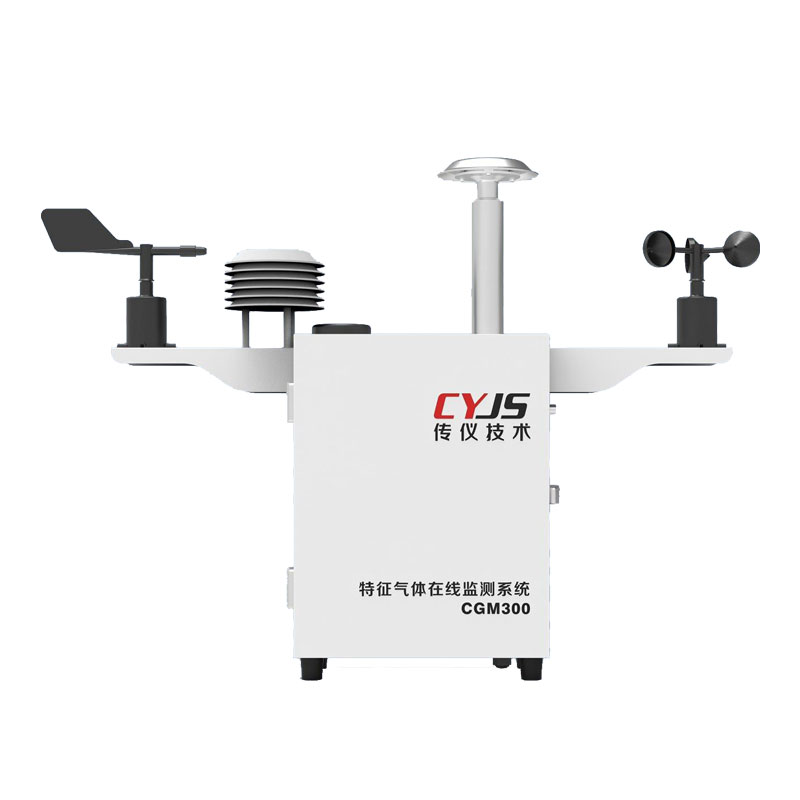
|