VOC100-Online VOC
VOC100-Online VOC

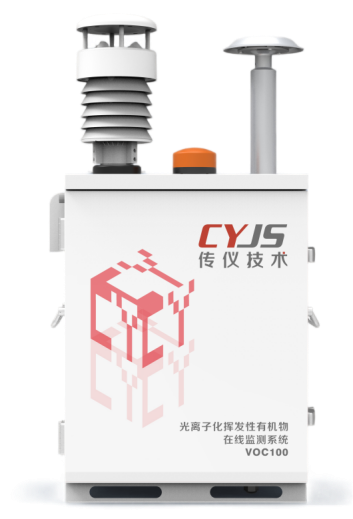
The VOC100 series of products are developed based on photoionization (PID) technology. They are designed for real-time, online monitoring of volatile organic compounds in the environment. These products offer functions such as sampling, filtering, dehumidification, flow rate control, and data transmission. They feature strong anti-interference capabilities, fast response times, and high measurement accuracy.




功能特点(所有型号) | Product Features
- Based on the PID photoionization principle, the service life of the sensor’s ultraviolet lamp is ≥18 months.
- It uses high-performance brushless motor air pumps, with a service life of ≥18,000 hours.
- Supports the full-life cycle management of sensors, provides reminders regarding their service life, and enables attenuation compensation.
- The system comes standard with Beidou positioning technology; the positioning accuracy error is less than 10 meters.
- Fixed antenna; onboard eSIM communication card; the card is soldered using industrial-grade soldering techniques, ensuring reliable performance in harsh environments and enabling long-term, contact-free operation.
- The optional eNose sensor array module enables the identification and monitoring of VOC gases.
产品型号 | Product Model
|
|
|
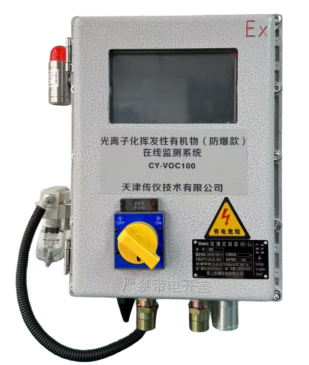
Factory boundary - Range0~20ppm - High-humidity resistance sensor - Long-life design | stationary source - Range0~100ppm - Built-in electronic condenser - Built-in zero-gas module | Explosion-proof - Range0~20ppm - Intrinsic safety sensors - The alarm message is displayed in bold on the screen. |

应用场景 | Application Scenarios
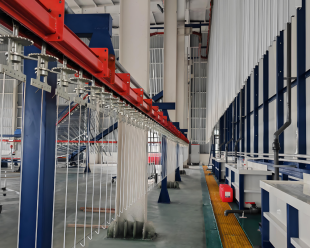
Scenario 1: Industrial sector – Monitoring of fixed pollution sources and process control systems
The industrial sector is the main source of VOC emissions. The core applications of these technologies include monitoring compliance with emission regulations, optimizing production processes, as well as detecting and repairing leaks (using LDAR technology).
| Petrochemical industry Monitoring: The refining of crude oil; the synthesis of petrochemical products such as ethylene and propylene; the emissions from the breather valves of storage tanks (crude oil/treated oil tanks); the volatilization that occurs during loading and unloading processes; as well as leaks at the sealing points of pipelines and equipment (such as valves and flanges). Goal: To comply with requirements such as the “Emission Standards for Pollutants in the Petroleum Refining Industry”, prevent the uncontrolled emission of VOCs, and reduce safety risks. | |
| Painting and spraying Monitoring applications: Automobile manufacturing (exhaust emissions from body painting and drying processes); furniture manufacturing (application of wood coatings); shipbuilding and construction machinery painting; as well as the production of coil coatings. Goal: To monitor the VOCs concentration in exhaust gases in real time (e.g., the total non-methane hydrocarbons, NMHC), ensuring compliance with local emission standards for the painting industry. At the same time, the painting process should be optimized by, for example, adjusting the solvent ratio. | |
| Electronic semiconductors Monitoring: Processes such as photolithography (volatilization of photoresist solvents), wafer cleaning (using organic solvents like isopropanol and acetone), and the exhaust process during the resin curing phase in the packaging procedure. Goal: To control the concentration of VOCs in the cleanroom (to prevent any impact on chip yield), while also monitoring the emissions from the exhaust outlets, in order to meet the environmental protection requirements of the electronics industry. |


Scenario 2: Ambient Air Quality Monitoring – Regional and Border Surveillance
Understand the levels of VOCs pollution in the region, trace the sources of pollution, and assess environmental risks.
| Urban air quality Monitoring: Automatic urban air quality monitoring stations (such as those under national or provincial supervision), as well as ecologically sensitive areas (such as the surroundings of nature reserves). Objective: To monitor the background concentrations of VOCs in cities over the long term (such as benzene compounds and aldehydes/ketones), analyze the trends in pollution levels, and provide data support for policies aimed at preventing and controlling air pollution, such as the “VOCs Control Plan”. | |
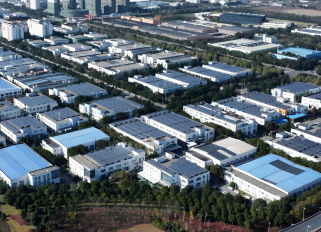
| Boundaries of the industrial park Monitoring: The boundary lines of chemical industrial parks and painting parks (sampling points should be installed both upwind and downwind of these areas), as well as the sensitive areas in the residential areas surrounding the parks. Goal: Monitor whether the VOCs emitted by the industrial park have an impact on the surrounding environment, prevent violations of environmental regulations, and respond to any environmental complaints from local residents. |

Scenario 3: Security Protection and Emergency Response: Risk Early Warning and Incident Management
Leveraging the advantages of PID technology – such as fast response times (within seconds) and the ability to be deployed either portably or fixedly – it is used for the rapid monitoring and early detection of safety incidents in emergency situations.
 | Enclosed spaces within pipe galleries Monitoring: Underground utility tunnels (for gas and sewage pipeline maintenance), as well as chemical plant reaction tanks. Goal: To monitor the concentration of VOCs in enclosed spaces in real time, thereby preventing the risk of poisoning. At the same time, the system can be connected to an alarm device that triggers audible and visual alerts when the concentration exceeds the safe limit, preventing people from entering the area. |
|